

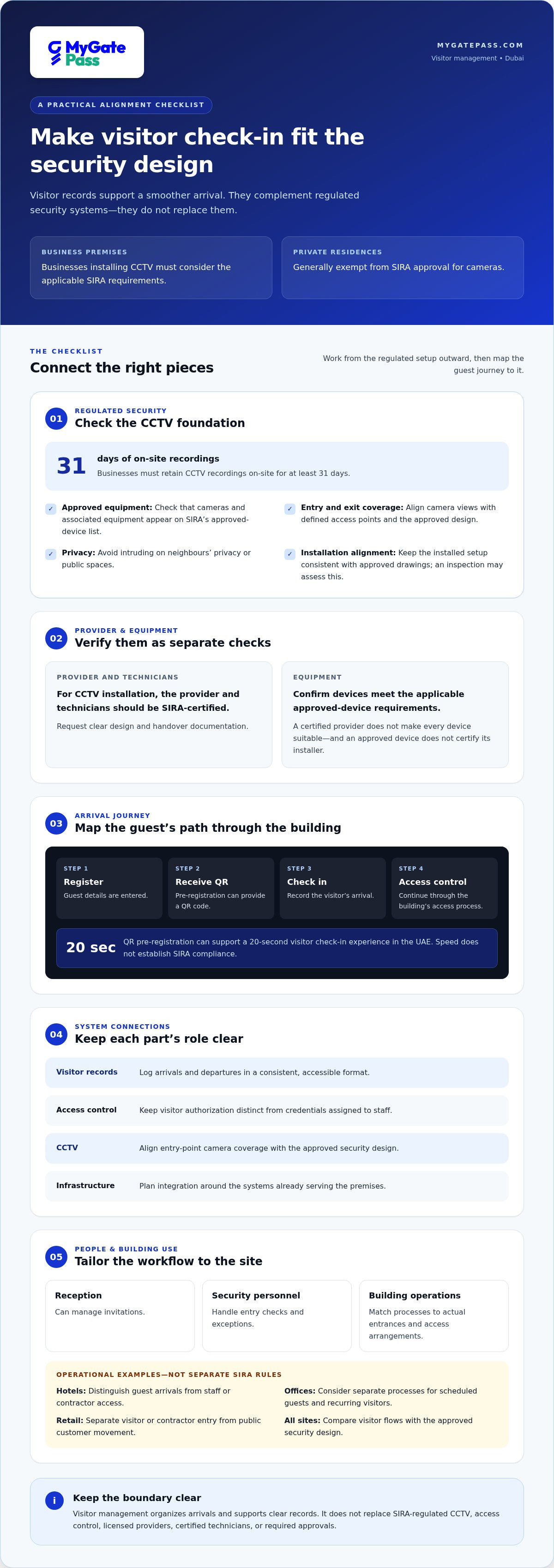
A visitor check-in app is only one part of a compliant entry experience. SIRA stands for the Security Industry Regulatory Agency, the authority responsible for regulating security frameworks. Achieving SIRA compliance for visitor systems in Dubai means understanding how visitor workflows across the UAE connect with regulated security systems such as CCTV, alarms, and access control. Businesses that install CCTV must meet SIRA requirements, including keeping recordings for at least 31 days.
A smooth check-in is only one part of a secure entry process. Visitor records and security systems need to work together without making arrival harder for guests or staff. This guide explains which premises must consider SIRA requirements, what certification covers, and how routine maintenance and audits support compliance. It also shows how visitor management platforms like MyGatePass fit into a wider security setup, helping you plan a more organized and welcoming entry experience.
Key Takeaways
- Identify whether your premises use security systems regulated by SIRA, then consider how those systems affect your approval and licensing requirements.
- Understand what SIRA certification covers and why approved equipment, installation records and alignment with approved drawings matter.
- Keep visitor check-in connected to the wider security process, with clear records and appropriate links to access control and CCTV.
- Tailor visitor procedures to the building’s use: residential buildings, offices, hotels and retail sites have different entry flows and management needs.
Which Businesses Must Comply with SIRA Regulations?
In Dubai, SIRA regulates CCTV, alarm and access-control systems. Businesses installing CCTV must meet the relevant requirements, while private residences are generally exempt from SIRA approval for cameras.
Regulated Security Systems
The Security Industry Regulatory Agency oversees security systems at regulated premises across Dubai. Its requirements matter because CCTV design, approved equipment and installation can affect a business’s security approval and, for some premises, its licence approval.
For CCTV, businesses must retain recordings on-site for at least 31 days. Cameras and associated equipment must appear on SIRA’s approved-device list, and placement should cover defined entry and exit points without intruding on neighbours’ privacy or public spaces. An inspection can assess whether the installed setup matches approved drawings.
Camera resolution and frame rate are part of the camera specification, so set them according to the approved design and the coverage required at each entrance or exit. Where appropriate, connect visitor records with access control so a guest check-in supports a clear entry log without replacing regulated security equipment.
Requirements Across Building Types
Requirements depend on a building’s use and security setup, not simply its label. A private residence is generally exempt from SIRA camera approval, while a business installing CCTV must consider the applicable requirements. Offices may use card or biometric access alongside visitor management.
Hotels and retail sites should map visitor handling to their actual entrances and access-control arrangements. A hotel, for example, can distinguish guest arrivals from staff access, while a retail site can manage visitor or contractor entry separately from public customer movement. These are operational distinctions, not separate SIRA rules.
For each site, compare visitor flows with the approved security design. Check how the system records entry, how access control responds, and whether camera views cover the required entrances. This helps keep convenient check-in aligned with the building’s regulated security setup.
What Is SIRA Certification?
SIRA certification relates to regulatory approval within Dubai’s security industry. The Security Industry Regulatory Agency was established in Dubai in 2016, and its remit includes security providers and monitoring and command centres. For businesses, certification matters because a security setup and the people responsible for it must align with applicable approval requirements.
When choosing a security provider, start by defining the work. For CCTV installation, the provider and technicians should be SIRA-certified, and equipment must meet the applicable approved-device requirements. Request clear design and handover documentation. Installation should match the approved drawings, since an inspection may assess that alignment.
Provider certification and equipment approval are separate checks. A camera on an approved-device list doesn’t certify the installer, and a certified provider doesn’t make every device suitable. Keep both points in mind when comparing security systems for offices or other business premises.
SIRA also regulates security industry trading activities. Company licensing requirements can include appointing a Security Manager with a valid SIRA Security Manager Licence. Licensing and approval timelines depend on the licence type, documentation and compliance; the stated typical approval period is 2-6 weeks. A SIRA licence is valid for 2 years, and renewal is required before expiry. Late renewal may bring fines or suspension.
Guarding is a separate security activity. Security guards require the relevant SIRA licence, so don’t confuse guard credentials with a company’s certification or a CCTV system’s approval. SIRA non-compliance fines can run into thousands of dirhams, and CCTV issues may require system modifications.
Digital tools can support internal coordination, but they don’t replace licensed providers, certified technicians or required approvals. For security personnel workflows alongside those responsibilities, explore the MyGatePass Security App.
SIRA-compliant visitor management in Dubai
Visitor management organizes arrivals; it doesn’t replace SIRA-regulated security equipment. The practical goal in Dubai is alignment: visitor records should complement CCTV and access control. Treat the visitor platform as one layer in the building’s wider security design, separate from any mandatory approvals for regulated systems.
Start by mapping the arrival journey. A guest may register, receive a QR code, check in, then proceed through access control. QR pre-registration can support a 20-second visitor check-in experience in the UAE. The speed of arrival is useful, but it doesn’t establish that a building’s security setup meets SIRA requirements.
For a coherent setup, consider how these parts connect:
- Visitor records: Log arrivals and departures in a consistent, accessible format.
- Access control: Keep visitor authorization distinct from credentials assigned to staff.
- CCTV: Align entry-point camera coverage with the approved security design.
- Infrastructure: Plan integration around the systems already serving the premises.
A well-designed visitor workflow makes responsibilities clear. Reception can manage invitations, while security personnel handle entry checks and exceptions. Hotels can separate guest arrivals from contractor access, for example, while offices may need different processes for scheduled guests and recurring visitors. These are operational choices, not separate SIRA rules.
Consider what information check-in collects. Identity details and visit logs should serve a clear operational purpose, with access limited to appropriate staff. For schools, screening visitors against watchlists and recording interactions can support oversight. These features don’t replace security approvals or establish compliance by themselves.
Assess visitor management alongside CCTV and access control, not as a standalone compliance certificate. Integration can improve visibility across entry processes, while regulated security systems remain subject to their own requirements.
How do SIRA visitor system requirements differ for residential buildings, offices, hotels, and retail sites?
Building use shapes visitor workflows, but doesn’t create a separate SIRA rule by itself. First distinguish the regulated security setup from the way people arrive. A visitor log manages reception records, for example, while CCTV and access control remain separate security systems. This distinction helps teams plan entry processes without confusing software functions with regulatory approval.
Residential buildings: Private residences in Dubai are generally exempt from SIRA approval for CCTV cameras. This exemption concerns residential camera approval, not every security system or shared facility. Residential tower management can still distinguish resident access from guest and contractor arrivals. For a villa, the visitor process may simply involve recording expected guests and notifying the resident.
Offices: Offices may use card or biometric access alongside visitor management. A scheduled guest can be logged separately from an employee using a permanent credential. Define who manages check-in, which entrances visitors use, and how reception communicates with security. Keep visitor permissions separate from staff access credentials.
Hotels: Hotels manage different arrival types, including guests, contractors and delivery personnel. A practical workflow separates front-desk guest arrivals from service access, then records each relevant visit. The hotel’s CCTV and access-control setup must still follow applicable SIRA requirements. Visitor software supports the process; it doesn’t certify the hotel’s security systems.
Retail sites: Retail premises have public customer movement alongside staff, supplier and contractor access. A store can distinguish ordinary customer entry from controlled back-of-house doors. Deliveries, for example, can use a designated staff-managed route while customers use public entrances. This separation helps maintain clear entry records without treating every customer as a registered visitor.
Across all four settings, assess the actual security systems, entry points and visitor categories. Then align the visitor workflow with the premises’ approved security design. To streamline building-specific check-ins, organize your visitor management workflow.
MyGatePass: MyGatePass Visitor App
The MyGatePass Visitor App helps organize check-ins in a digital entry workflow. For teams managing guest arrivals, the MyGatePass Security App supports security personnel, while the MyGatePass Admin Dashboard centralizes visitor operations. The UAE Pass Integration Module supports verified visitor identification through UAE Pass.
These tools bring visitor, security and administrative tasks into a more connected process. They don’t replace SIRA approval for regulated security systems, certified installation or required audits. Instead, they support the visitor-management layer alongside the building’s broader security setup.
Planning a smoother, more transparent visitor process? Contact MyGatePass to discuss your requirements.
Build Compliance Into Everyday Operations
Make compliance part of routine operations, not a task revisited only during an audit. Give facilities, reception and security teams a shared process for updating visitor workflows when entry routes, staffing patterns or building use changes. Clear ownership keeps daily procedures connected to the site’s security plan.
SIRA compliance for visitor systems in Dubai works best when digital administration and on-site procedures support each other. Review who manages visitor records, how staff handle exceptions, and whether teams understand the process. Regular operational reviews can help identify gaps early and make updates more manageable, without treating software as a substitute for regulatory approvals.
Choose a next step that fits your premises and the way people move through it. A focused discussion can help clarify how visitor management fits into your wider entry workflow. Discuss your visitor system plans with MyGatePass and move toward a more organized arrival experience.
Frequently Asked Questions
What Is the Full Form of SIRA?
SIRA stands for Security Industry Regulatory Agency, the authority responsible for regulating Dubai’s security industry. When reading approval documents, distinguish the agency’s role from a provider’s licence or an individual guard’s credentials. A visitor log is an operational record, for example, while a security provider’s licence concerns the company and applicable personnel.
What Are the Penalties for Non-Compliance?
Non-compliance can lead to fines, legal action or business closure. CCTV issues may also require mandatory system modifications and could affect a business licence. Fines can run into thousands of dirhams, and a non-compliant installation may need reworking at the installer’s or owner’s cost. Consequences depend on the issue, so businesses should retain approved plans and installation records as important operational documents.
What is SIRA (Security Industry Regulatory Agency)?
SIRA is Dubai’s security industry regulator, established by decree in 2016. It took over from the Department of Protective Systems that year. Its remit includes security systems such as CCTV, alarms and access control, as well as certification for monitoring and command centres. For building operators, this means the agency’s role relates to regulated security arrangements, not simply the visitor check-in process.
Who Must Obtain a SIRA Licence in UAE?
SIRA licensing applies to regulated security activities in Dubai; don’t assume a Dubai licence covers every UAE emirate. Companies applying for a SIRA licence must appoint a Security Manager with a valid SIRA Security Manager Licence. Security guards also require SIRA licensing. These are distinct credentials: a company’s licence, its Security Manager’s licence and an individual guard’s licence cover different roles.
What is SIRA and which Dubai visitor management systems require approval?
SIRA regulates security systems in Dubai, including CCTV, alarms and access control. For SIRA compliance for visitor systems in Dubai, distinguish a check-in tool from the security equipment it may connect with. A digital visitor log records arrivals; it doesn’t replace approval or inspection of a regulated system. Logging a guest in an app, for example, is not the same as approving CCTV equipment or its installation.
What are SIRA requirements for visitor registration and identity verification in Dubai?
Keep visitor registration and identity verification separate from SIRA certification of security systems. The practical priority is a consistent check-in process that fits the premises’ visitor workflow. UAE Pass integration can support verified visitor identification. A host, for example, can use identity verification during guest registration, while the building’s CCTV and access-control arrangements remain subject to their own applicable requirements.


