
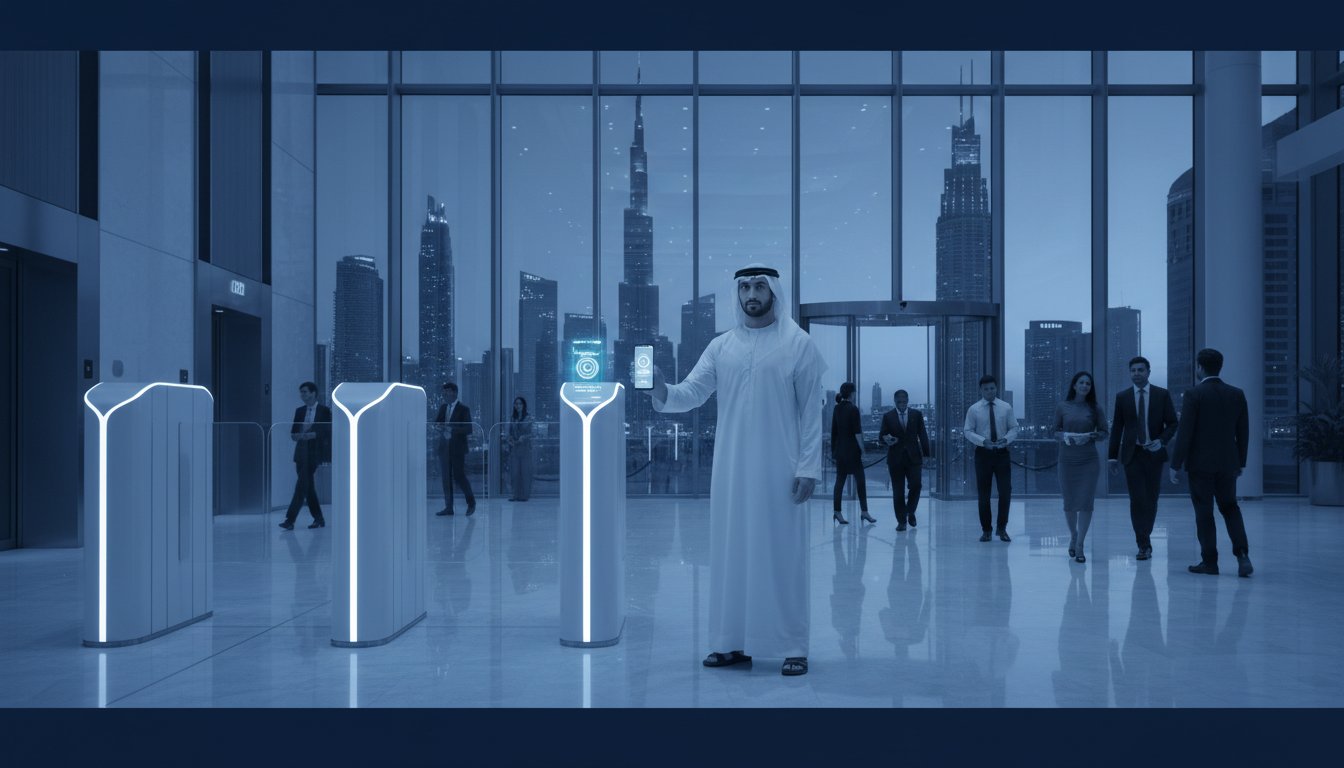
What if the most valuable square meter of your property isn't the penthouse view, but the digital gateway that manages every interaction before a guest even steps inside? With the UAE construction market projected to reach $52 billion by 2033 and the momentum from $56.9 billion in new contractor awards in 2025, the competition for high-value tenants is intense. You likely recognize that security bottlenecks and high turnover in mixed-use buildings are silent profit killers. Solving these pains requires a sophisticated approach to sub-tenant visitor management UAE, mixed-use development access control UAE, and parent tenant visitor system UAE to ensure your asset remains both secure and welcoming.
This article explores how smart technology is transforming from a basic utility into a strategic financial asset that drives ROI. You'll discover how these systems streamline operations and directly increase your property's market value by reducing friction for every resident. We'll dive into the 2026 trends for digital access, including full compliance with the Personal Data Protection Law and the new Child Digital Safety Law that took effect on January 1, 2026. We're previewing the tech that turns operational clarity into a seamless tenant experience and a future-proof investment.
Key Takeaways
- Learn how smart access technology has evolved into a high-yield financial asset that attracts premium tenants by prioritizing a frictionless entry experience.
- Identify the strategies needed to resolve complex bottlenecks in mixed-use towers, specifically focusing on sub-tenant visitor management UAE, mixed-use development access control UAE, and parent tenant visitor system UAE.
- Master the digital "Master Key" approach to provide centralized oversight while allowing decentralized guest management for large-scale commercial hubs.
- Turn regulatory requirements into a competitive advantage by integrating UAE Pass to ensure full compliance with the 2026 data privacy standards.
- Unlock operational clarity and a seamless community atmosphere through a software-first approach that prioritizes the human element of every visit.
The Evolution of Property Value and Smart Tech in the UAE
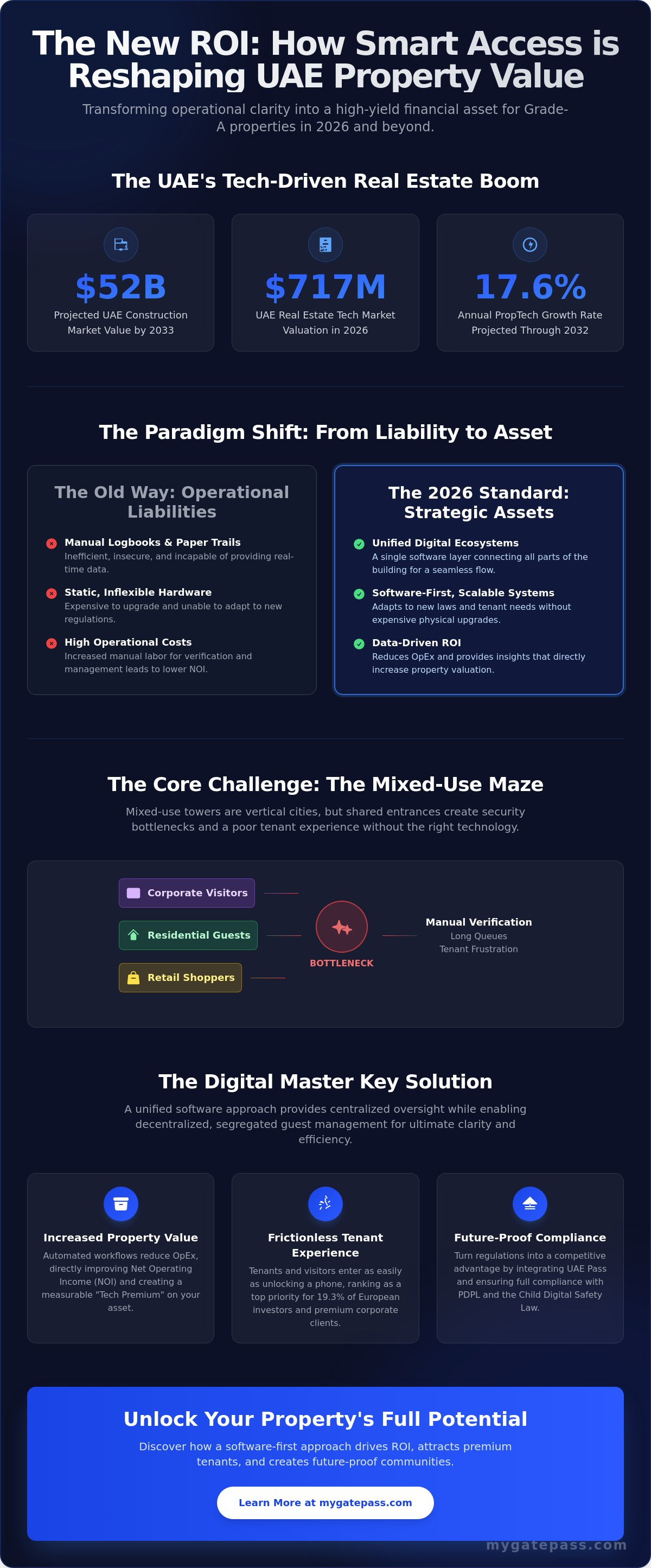
The intersection of property valuation and technology has reached a critical turning point. In 2026, the UAE real estate tech market is valued at USD 717.0 million and is projected to grow by 17.6% annually through 2032. This isn't just about aesthetics; it's about financial performance. Asset managers now view software as a primary driver of ROI rather than a simple back-office expense. For complex assets, sophisticated sub-tenant visitor management UAE, mixed-use development access control UAE, and parent tenant visitor system UAE protocols are now essential to maintain Grade-A status.
Modern tenants in Dubai and Abu Dhabi prioritize efficiency over traditional perks. European investors, who contribute nearly 19.3% to mixed-use sales, often rank frictionless entry higher than the size of a building's lobby or gym. They want to enter their building as easily as they unlock their phone. The shift from manual logbooks to digital ecosystems is now a standard for Grade-A UAE properties because paper records can't offer the security or speed required in a digital-first market that aligns with global smart city trends.
Smart access technology reduces operational expenditure by automating verification workflows and cutting manual labor costs, which directly improves net operating income and property valuation.
Why Smart Tech is a Top Priority for Investors
Investors aren't guessing about building performance anymore. They rely on real-time transparency to protect their capital. By leveraging community security data, facility managers provide granular reports on peak traffic and visitor types that inform long-term strategy. This data creates a "Tech Premium" where buildings with seamless digital gates see higher retention and rental yields.
- Data-driven insights: Real-time tracking identifies underutilized entry points to optimize staffing.
- Higher Yields: Properties with integrated tech attract premium corporate and residential tenants willing to pay for convenience.
- Future-proofing: Static hardware is a liability because it can't adapt to new laws, such as the Child Digital Safety Law that became enforceable on January 1, 2026.
The 2026 Standard for Luxury and Commercial Assets
Luxury doesn't mean exclusive anymore; it means effortless. The 2026 standard for high-end assets requires unified software that connects every part of the building. This includes integrating national digital identities like the UAE Pass, which now provides access to over 6,000 services. Modular software suites have replaced rigid hardware installations because owners demand scalability. They need systems that grow with their tenant base without requiring expensive physical upgrades every few years. This flexibility ensures that the building remains a high-tech ecosystem rather than just a physical structure.
Solving the Mixed-Use Development Access Control UAE Challenge
Mixed-use towers are effectively vertical cities. In Dubai and Abu Dhabi, these structures combine high-end retail, corporate offices, and luxury residential units into a single footprint. While this trend is driven by a focus on sustainability and lifestyle convenience, it creates a significant logistical hurdle for facility managers. The primary bottleneck occurs at shared entrances where users with vastly different security clearance levels converge. Managing this chaos requires a sophisticated approach to mixed-use development access control UAE that can distinguish between a resident's family member and a high-stakes corporate client in real-time.
Without a centralized digital ecosystem, security teams often resort to manual verification, which leads to long queues and frustrated tenants. Implementing sub-tenant visitor management UAE systems allows for the creation of segregated data silos. This ensures that a residential property manager only sees residential data, while corporate sub-tenants maintain their own private visitor logs. This separation isn't just about efficiency; it's a core requirement for maintaining operational clarity and trust within a shared building. Digital records aren't just a convenience; they're a legal necessity for establishing sub-tenant liability under the UAE's Personal Data Protection Law (PDPL).
Managing Diverse User Groups Simultaneously
The key to a smooth visitor experience lies in creating unique workflows for every guest type. A delivery driver shouldn't follow the same protocol as a VIP corporate guest. Modern systems now utilize pre-registration trends to reduce front-desk congestion, allowing guests to receive a digital pass before they arrive. This proactive approach ensures that high-turnover commercial spaces remain secure without feeling restrictive. If you're looking to streamline these complex interactions, you might consider how a modern visitor app can unify your building's operations.
- Delivery Management: Time-limited access codes for couriers that expire immediately after use.
- Corporate Guests: Professional, white-glove digital invitations that reflect the prestige of the business.
- Real-Time Alerts: Instant notifications for tenants the moment their guest arrives at the main gate.
Sub-Tenant Autonomy vs. Centralized Control
A major gap in traditional security is the "all-or-nothing" approach to access. Premium sub-tenants often demand the ability to manage their own guest lists without waiting for building-wide security approvals. By deploying a parent tenant visitor system UAE model, property owners empower sub-tenants with autonomy while retaining master oversight. This "white-labeled" access allows corporate tenants to brand their visitor experience, which significantly boosts the perceived value of the office space. It transforms the security process from a hurdle into a seamless part of the professional journey.
The Rise of the Parent Tenant Visitor System UAE
Large commercial hubs across Dubai and Abu Dhabi are adopting the "Parent Tenant" model to manage the high volume of daily traffic within vertical business communities. In this structure, a primary anchor tenant or building owner maintains master oversight while delegating guest management to individual sub-tenants. This acts as a digital "Master Key." It provides centralized visibility for the owner while allowing decentralized execution for every business on the premises. Implementing a parent tenant visitor system UAE ensures that security remains robust without creating a bottleneck at the main lobby.
This hierarchy significantly improves check-in speeds for large organizations. Instead of every visitor waiting for a single receptionist to verify their identity, guests are pre-cleared by the specific company they are visiting. This specialized workflow is becoming a benchmark for high-traffic assets, mirroring the sophisticated benchmarks found in the Ultimate Guide to Digital Gate Pass Apps. It's about empowering the people who know the guests best to manage the entry process.
Benefits for Large-Scale Anchor Tenants
Anchor tenants often face the greatest pressure when it comes to lobby congestion and facility usage. By shifting toward a software-driven sub-tenant visitor management UAE strategy, these organizations remove the operational burden from the main building reception. This allows for customized visitor apps tailored to specific departments, such as HR for interviews or Sales for client meetings. Enhanced reporting also gives parent tenants clear insights into how their shared facilities are being utilized throughout the day, helping them optimize space and resources.
Comparing Legacy vs. Modern Parent-Sub Systems
The transition from manual processes to smart ecosystems isn't just a trend; it's a measurable upgrade in building performance. Modern software-driven systems typically reduce administrative overhead by 40%, allowing front-desk staff to focus on hospitality rather than paperwork. The difference in data accuracy and speed is stark when comparing these two approaches.
| Feature | Legacy (Paper/Manual) | Smart (Software-Driven) |
|---|---|---|
| Average Wait Time | 8-12 Minutes | Less than 45 Seconds |
| Data Accuracy | Low (Handwritten errors) | High (Digital verification) |
| Admin Overhead | High (Manual logging) | 40% Reduction (Automated) |
| Audit Readiness | Difficult/Time-consuming | Instant (One-click reports) |
By moving away from long lines and toward digital records, building owners foster a sense of community and efficiency. This "worry-free" approach to mixed-use development access control UAE suggests that security doesn't have to come at the expense of a smooth guest experience. It turns a mandatory security check into a professional, high-tech concierge service that starts the moment a visitor arrives.
Compliance as a Value Driver: UAE Pass and PDPL
Compliance in 2026 isn't just a legal box to tick; it's a prestige marker that directly influences property appraisal. High-end property owners in Dubai and Abu Dhabi understand that a single data breach or a regulatory fine can significantly erode an asset's market reputation. With the full enforceability of the UAE Personal Data Protection Law (PDPL) and the new Child Digital Safety Law that took effect on January 1, 2026, the stakes have never been higher. Modern investors look for buildings that treat data sovereignty as a core utility. This is why UAE Pass integration for buildings has become a non-negotiable asset feature for any developer aiming for Grade-A status.
Verified identity acts as the ultimate deterrent for security breaches. When a guest uses their national digital ID to enter a facility, the integrity of the security data is absolute. For complex assets, a parent tenant visitor system UAE ensures that even when guest management is decentralized, the overarching data handling remains compliant with federal standards. This level of operational clarity builds immense trust with corporate tenants who handle sensitive information daily. They don't just want a secure office; they want a secure digital ecosystem that protects their employees and visitors alike.
The Seamless Identity Verification Trend
The days of physical ID scanning at a front desk are over. UAE Pass now provides access to over 6,000 services, and its integration into mixed-use development access control UAE protocols has eliminated guest friction. Visitors simply tap or scan, and their identity is verified through a biometric-backed digital signature. This process doesn't just speed up entry; it ensures that the building is only collecting the minimum necessary data required by law. For VIP tenants, this seamless verification is a primary expectation of luxury living and working environments.
Data Sovereignty and Building Reputation
Protecting tenant privacy has evolved into a powerful marketing tool. When you're managing sub-tenant visitor management UAE workflows, the shift from "recording data" to "managing identity" is crucial. Secure, encrypted data storage increases the long-term saleability of a property by providing a clean, auditable trail of building usage that satisfies institutional buyers. It moves the conversation away from liability and toward asset resilience. If you want to future-proof your building with a compliant, high-tech concierge, get started with MyGatePass to unify your security and hospitality standards.
A building that respects data privacy is a building that respects its community. By prioritizing these digital standards, property managers foster an environment of "sophisticated simplicity" where security is robust but never intrusive. This balance is what defines the most successful UAE real estate investments in 2026.
Unlocking ROI with MyGatePass: The Future of UAE Communities
2026 is the year where the digital and physical worlds merge completely in UAE real estate. MyGatePass stands at this intersection as a software-first solution. It's built for the high expectations of the modern market. Property owners no longer want to be tied down by rigid hardware that becomes obsolete in a few years. They want the flexibility of a cloud-based ecosystem that evolves alongside national regulations like the PDPL. Our "Worry-Free" philosophy ensures that security enhances the visit rather than hindering it. It's about turning a mandatory check into a welcoming interaction.
The MyGatePass suite provides the operational clarity owners need to scale. Whether you're managing complex mixed-use development access control UAE or a multi-layered parent tenant visitor system UAE, the goal remains the same: simplicity. Our modular approach means you can deploy exactly what you need, from delivery management to staff attendance tracking. This level of customization is what separates a standard building from a high-yield community asset. By focusing on the human element, we ensure that every guest feels like they're entering a well-managed, high-tech ecosystem.
A Connected Community Ecosystem
Smart living is about more than just a mobile app. It's about a connected ecosystem where every interaction is smooth and predictable. The MyGatePass software suite fosters this feeling by giving residents and tenants total control over their guest lists through sub-tenant visitor management UAE workflows. This real-time visibility allows facility managers to operate with a level of efficiency that was previously impossible. When the data is centralized, you can identify trends, optimize staffing, and even integrate lifestyle perks like exclusive community offers. These small touches transform a physical building into a desirable lifestyle brand, directly boosting property desirability and long-term value.
Next Steps for Property Owners and Managers
The first step toward modernizing your asset is an honest audit of your current gate security. Is your entrance a value-add or a bottleneck? If your visitors are still facing long lines or physical ID scans, you're losing money through tenant dissatisfaction and operational friction. The transition from hardware-heavy systems to a software-driven approach is simpler than you think. By focusing on digital verification and mobile-first access, you can unlock a higher ROI and a safer community environment. It's time to move away from paperwork and toward a centralized, digital record of every visit.
Visits. Made Simple. If you're ready to see how operational clarity can transform your property's value, explore the MyGatePass Admin Dashboard in action. 2026 is the year of the "Digital Concierge," and your building shouldn't be left behind.
Secure Your Property's Digital Future
The landscape of 2026 UAE real estate demands more than just physical security; it requires a sophisticated digital gateway that transforms every visit into a value-adding interaction. By integrating sub-tenant visitor management UAE, mixed-use development access control UAE, parent tenant visitor system UAE protocols, you're not just managing gates. You're building a resilient, high-yield asset that aligns with the UAE real estate tech market's 17.6% annual growth. Compliance with the Personal Data Protection Law and the January 1, 2026 Child Digital Safety Law has shifted from a legal burden to a competitive advantage that attracts premium investors.
It's time to replace legacy bottlenecks with a SaaS-driven ecosystem that prioritizes human connection. With direct UAE Pass integration and modular delivery tracking, you can ensure your building remains a top-tier destination that values every user's time. This operational clarity is the key to reducing high turnover and maximizing your asset's ROI in a digital-first market. Unlock operational clarity and boost your property value with MyGatePass. Your community deserves a seamless experience that's always one step ahead.
Frequently Asked Questions
How does smart access technology directly increase property value in the UAE?
Smart access technology increases property value by reducing operational costs and improving tenant retention rates. Properties with high-tech infrastructure often see a "Tech Premium" in rental yields because they attract the 19.3% of European investors who prioritize digital convenience. These systems lower the administrative burden on facility managers; this directly improves the building's net operating income and long-term appraisal value.
What is the difference between a parent tenant and a sub-tenant in visitor management?
A parent tenant visitor system UAE provides the building owner or anchor tenant with master oversight while the sub-tenant visitor management UAE allows individual businesses to manage their own guests. The parent tenant sets the overarching security rules. Sub-tenants then execute these rules for their specific visitors, ensuring autonomy without compromising the building's total security ecosystem.
Is UAE Pass integration mandatory for residential buildings in 2026?
While not explicitly mandatory for every private entrance, UAE Pass integration is the most efficient way to comply with the Personal Data Protection Law (PDPL) and the Child Digital Safety Law of January 1, 2026. It provides a verified digital identity for guests across 6,000 services. Buildings without this integration risk non-compliance fines and higher friction for residents who expect seamless digital verification.
Can smart visitor systems manage both commercial and residential guests in mixed-use towers?
Yes, a robust mixed-use development access control UAE system utilizes segregated data silos to manage different user groups within one building. It allows residential managers to see residential data while corporate sub-tenants maintain private logs for their office guests. This separation ensures that high-turnover retail or office traffic doesn't interfere with the privacy and security of residential floors.
How does digital visitor management improve building security compared to manual logs?
Digital systems eliminate the 12-minute average wait times and high error rates associated with manual logbooks. They provide real-time alerts to tenants and create an unalterable audit trail that satisfies UAE security standards. Unlike paper logs, digital records are easily searchable and secure; this prevents unauthorized access to visitor data and improves the building's overall safety reputation.
What are the typical ROI timelines for implementing a digital gate pass system?
Most properties see a return on investment within 6 to 12 months of implementation. This is achieved through a 40% reduction in administrative overhead and a significant decrease in tenant turnover. By automating the verification process, buildings can reallocate staff to high-value hospitality roles rather than manual data entry, which enhances the overall community experience.
Does MyGatePass require specific gate hardware to be installed?
MyGatePass is a software-first solution that doesn't require you to purchase or install proprietary gate hardware. It's designed to integrate with your existing infrastructure through our dedicated apps and admin dashboard. This flexibility allows property managers to upgrade their digital ecosystem without the high cost of physical hardware replacement or long construction delays.
How does the system handle delivery personnel and contractors differently from guests?
The system uses a dedicated Delivery Management System to provide time-limited, one-time access codes for couriers. Unlike standard guests who may have broader access, delivery personnel and contractors are restricted to specific zones and timeframes. This ensures that high-frequency traffic is managed efficiently without compromising the security of private residential or corporate office areas.


