

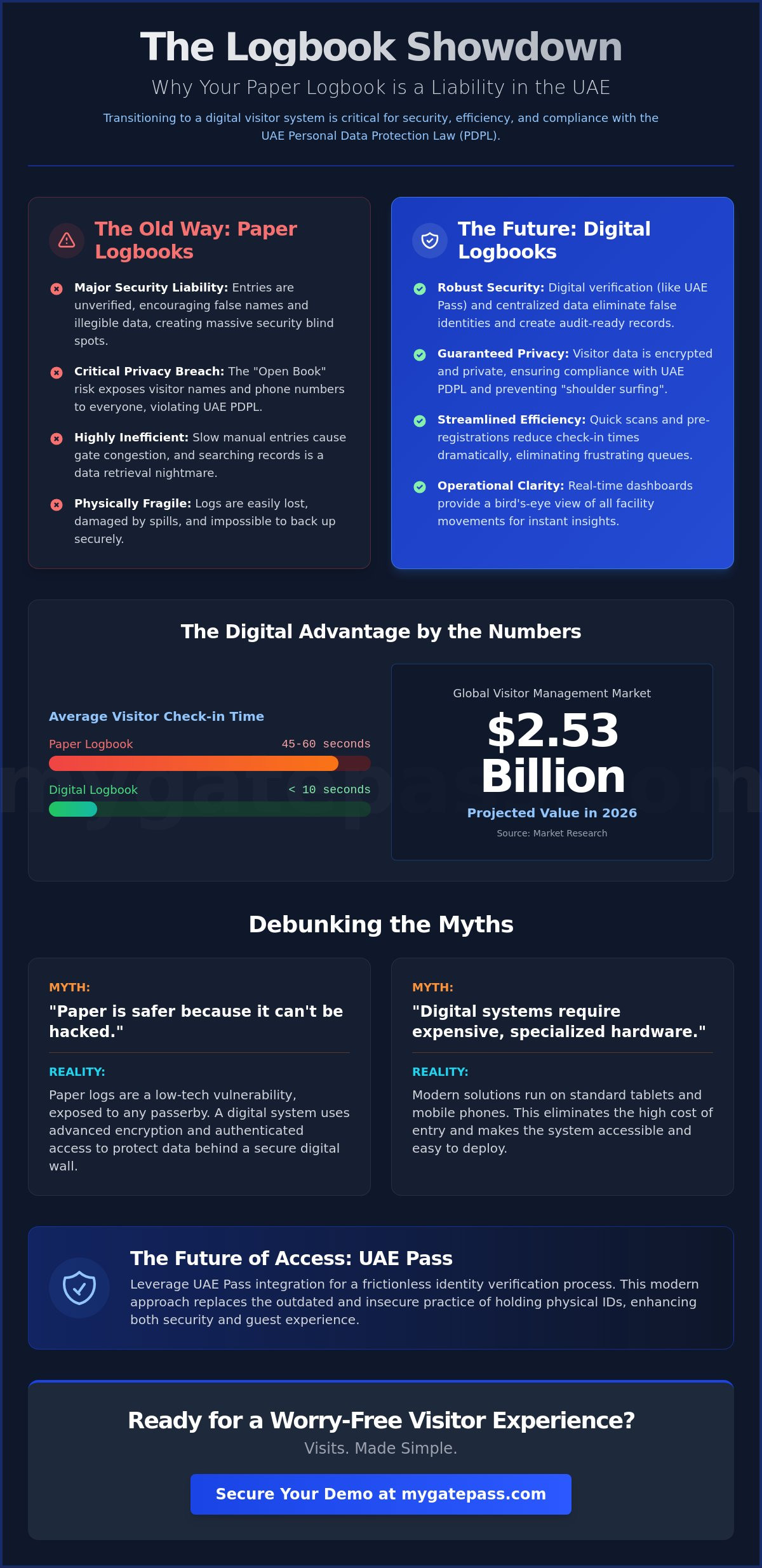
That dusty paper logbook at your front desk isn't just an administrative relic; it's a direct threat to your community's safety and a violation of the UAE Personal Data Protection Law (PDPL). Every time a visitor's private details are left exposed on an open page, your organization risks non-compliance with Federal Decree-Law No. 45 of 2021. Transitioning to a digital visitor logbook is no longer a luxury. It's a critical move to close security gaps as the global market for these systems reaches an estimated 2.53 billion dollars in 2026.
You likely feel the daily friction of squinting at illegible handwriting or watching long queues form at the gate. It's frustrating when security protocols slow down the very people they're meant to protect. We'll show you how to replace these hurdles with a "worry-free" experience that prioritizes both privacy and speed. Visits. Made Simple. This article explores why traditional logs jeopardize your safety and how modern systems ensure operational clarity. We'll debunk five common myths about going digital and show you how to achieve faster check-ins and audit-ready records that enhance your community's prestige.
Key Takeaways
- Understand why traditional paper logs are security liabilities that encourage false data and illegible entries at your gate.
- Protect guest privacy and ensure UAE PDPL compliance by closing the "open book" that exposes visitor phone numbers to every stranger who walks in.
- Learn how a digital visitor logbook leverages mobile apps and tablets to eliminate the high costs and complexity of specialized hardware.
- Unlock operational clarity with real-time dashboards that provide a bird’s-eye view of every movement within your facility.
- Explore how UAE Pass integration creates a frictionless identity verification process that replaces the outdated practice of holding physical IDs.
The Myth of the Reliable Paper Logbook: Why Manual Entries Fail
Many facility managers still rely on a spiral-bound notebook at the security desk. They believe it's "good enough" for daily operations. It isn't. A digital visitor logbook is a cloud-based software solution that automates guest registration and tracking. It eliminates the "Trust" illusion. This is the false sense of security where guards, often overwhelmed by queues, accept any scribble a visitor provides. In reality, a manual log is just a collection of unverified ink that offers zero protection against unauthorized access.
By 2026, the standard for facility management has shifted toward sophisticated simplicity. Paper is no longer acceptable. The global market for Visitor Management Systems is projected to hit 2.53 billion dollars this year for a reason. Digital records provide operational clarity that a physical book simply cannot match. If a security incident occurs, searching through months of stacked paper logs is a data retrieval nightmare. It's slow; it's prone to human error; it's practically impossible to audit. Modern digital systems allow for instant, real-time searches that keep your community one step ahead.
The Problem with Unverified Data
Manual logs rely entirely on the honesty of the visitor. While most guests are truthful, security protocols are designed to catch the exceptions. Unverified entries create massive "blind spots" in your building security. Consider these common vulnerabilities:
- False Identities: Visitors often use fake names or nicknames that can't be traced.
- Illegible Handwriting: Guards frequently accept scribbles that are impossible to read during an audit.
- Physical Fragility: Paper logs are easily damaged by spills or lost during office relocations.
If a phone number is missing a digit or a name is faked, the record becomes a useless piece of paper. A robust digital visitor logbook ensures your data is centralized, backed up, and compliant with UAE data laws. It shifts the burden of verification from the guard's eyes to a secure digital process.
Processing Times and Gate Congestion
Time is your most valuable asset. Writing a name, phone number, and car plate manually takes an average of 45 to 60 seconds per visitor. A quick digital scan or QR code check-in takes less than 10 seconds. During peak hours, these extra seconds create long lines and frustrated visitors. Manual logs are a primary cause of gate congestion that lowers the prestige of a community. Switching to a digital workflow transforms a mundane security process into a smooth and enjoyable experience. It's about moving from "paperwork" to "enhanced connectivity" for every resident and guest. Visits. Made Simple.
Privacy Misconceptions: Is Your Visitor Log Actually Secure?
A dangerous myth persists in facility management: the idea that paper is safer because it can’t be hacked. This logic assumes that because a book isn't connected to the internet, it's immune to data breaches. This couldn't be further from the truth. While a digital visitor logbook uses advanced encryption to protect data, a paper logbook sits on a desk, completely exposed to anyone walking past the gate. It's a low-tech vulnerability that compromises the privacy of every resident and guest in your community.
The "Open Book" risk is the most immediate threat. When a new visitor arrives, they're often asked to sign the same page as the ten people before them. In seconds, they can see names, phone numbers, and even the specific villa or apartment numbers of your residents. This isn't just a lapse in hospitality; it's a fundamental security failure. By adopting modern visitor management strategies, you replace this "open book" with a private, digital interface. Cloud storage is inherently more secure because it requires authenticated access, ensuring that sensitive data stays behind a robust digital wall rather than sitting on a public counter.
Data Privacy in Plain Sight
Shoulder surfing is a major concern at busy security points. It only takes one person with a smartphone camera to capture a full page of resident guest lists. The legal implications of this exposure are significant. If a resident's private information is leaked because your manual log was left unattended, your organization could face serious liability. A digital system masks this data. It ensures that visitor A never sees the details of visitor B, fostering a sense of trust and "worry-free" interaction for everyone entering the premises. You can easily manage these permissions through a centralized MyGatePass Admin Dashboard to keep your operations crystal clear.
Compliance with National Regulations
The regulatory landscape in the UAE has changed. Under the UAE Personal Data Protection Law (PDPL), Federal Decree-Law No. 45 of 2021, businesses must have a lawful basis for processing data and must protect it from unauthorized access. Manual logs, by their very nature, make compliance nearly impossible. They don't allow for easy data deletion or "right to be forgotten" requests, which are key pillars of the PDPL.
Switching to a digital record ensures you are audit-ready at a moment's notice. These systems provide a clear, timestamped history of who accessed what data and when. For those looking to meet the highest standards of 2026 security compliance, exploring UAE Pass Integration for Buildings is the next logical step. It eliminates the need for physical ID exchange entirely, keeping your community safe, modern, and fully compliant with national privacy standards.
Hardware vs. Software: Debunking the High-Cost Entry Barrier
A common misconception stops many facility managers from upgrading: the fear of high upfront costs. You don't need to install heavy, floor-mounted kiosks to modernize your gate. The SaaS revolution has transformed the digital visitor logbook into a lightweight, app-based tool that runs on standard hardware. This shift makes high-tech security accessible for any community, from a single-gate villa to a multi-tower complex. While some competitors focus on selling expensive L-type kiosks, the modern approach prioritizes the software ecosystem. This ensures your security remains agile and easy to update as your needs grow.
By moving away from proprietary hardware, you gain immediate flexibility. Advances in visitor management technology now allow for sophisticated features like biometric verification and secure cloud syncing without the need for specialized engineering. It's about sophisticated simplicity. You focus on the software that empowers your team, while using the tablets and smartphones they already understand. This reduces the learning curve for staff and ensures a smooth transition for residents who expect a tech-forward living environment.
The Mobile-First Approach
Your security personnel shouldn't be tethered to a desk. Using a mobile-first digital visitor logbook, guards can manage entries while walking the perimeter or inspecting a delivery. This mobility fosters a more proactive security environment. Standard smartphones or tablets can now handle MRZ scanning, which instantly reads Emirates IDs and passports with 100% accuracy. It's a frictionless process that replaces the slow, error-prone method of typing details into a manual ledger. Guards feel empowered, and visitors enjoy a worry-free entry from the moment they arrive.
Reducing Long-Term Operational Costs
The true price of a manual system is often hidden in administrative waste. Think about the costs of physical storage, shredding services for sensitive data, and the hours staff spend manually compiling monthly reports. These tasks don't add value to your community. A digital subscription offers a clear ROI by automating these repetitive workflows. You'll see a significant drop in paper waste and a boost in operational clarity. Managers get instant access to audit-ready data without digging through dusty archives. It's a cleaner, greener, and more efficient way to protect your facility. The environmental impact alone makes the switch to a paperless gate system a statement of prestige for any modern UAE building.
Operational Clarity: Beyond Simple Check-ins
A traditional logbook tells you who entered your building, but it fails to explain how your facility actually functions. Moving to a digital visitor logbook transforms your security gate from a bottleneck into a sophisticated data hub. Real-time dashboards provide an instant bird's-eye view of every entry, exit, and delivery across your entire premises. Managers no longer have to guess about site activity or wait for end-of-month manual reports. They can see exactly how many contractors are on-site at 10:00 AM or track how long a maintenance crew takes to complete a specific job. This level of operational clarity allows you to move away from reactive security toward a proactive, well-managed ecosystem that values everyone's time.
Actionable Insights for Managers
Data is the most powerful tool in your security arsenal. By analyzing visitor trends, you can identify peak entry times with 100% accuracy. If your data shows a 35% spike in visitor traffic every Tuesday afternoon, you can adjust guard scheduling to ensure a smooth flow without increasing costs. This eliminates unnecessary wait times while maintaining high security standards. Digital records also simplify contractor and staff management. Using the built-in staff attendance tracking, you can verify exactly when service providers arrive and depart. This ensures you only pay for the hours worked and that service level agreements are strictly met. It's about moving from "Who is here?" to "How is my facility being used?" to optimize every aspect of your operations.
Fostering a Connected Community
Security shouldn't feel like a hurdle; it should feel like a premium service. A smooth, digital entry process significantly increases resident satisfaction and property prestige. When a resident receives a real-time notification that their guest has arrived, it creates a "worry-free" living environment that feels like a high-tech concierge service. This connected approach fosters a sense of community where safety and hospitality coexist. Positioning your gate pass as a lifestyle perk rather than a security barrier adds tangible value to the property. It’s about creating meaningful interactions that make every visit enjoyable. By 2026, residents expect their homes to be part of a well-managed, high-tech ecosystem that is always one step ahead.
Ready to unlock deep operational clarity for your facility? Explore the MyGatePass Admin Dashboard to streamline your community management today.
The Future of Access: UAE Pass and Verified Identity
The security landscape in the UAE is undergoing a massive transformation. We're moving away from physical identity exchange toward a unified, national digital identity. This isn't just a trend; it's the 2026 standard for any high-tech ecosystem. Integrating a digital visitor logbook with the UAE Pass system is the final step in eliminating the privacy risks of manual logs. It removes the need for security guards to hold onto physical Emirates IDs. This practice is becoming increasingly obsolete in our smart city environment and often creates unnecessary friction at the gate.
National digital identity is now the benchmark for secure building access. By removing the physical exchange of cards, you eliminate the risk of ID loss or theft. It also ensures that your facility remains compliant with the UAE Personal Data Protection Law, specifically Federal Decree-Law No. 45 of 2021. This modern approach positions your community as a leader in security and hospitality. It’s about moving from outdated paperwork toward a future of "worry-free" experiences and "operational clarity."
Seamless Identity Verification
Visitors can now verify their identity in seconds using their smartphones. By leveraging the UAE Pass, your facility gains access to 100% verified guest data without the friction of manual entry. This technology aligns perfectly with national smart city initiatives. It positions your community as a forward-thinking innovator. It’s a robust solution that ensures every person entering your premises is exactly who they claim to be. This level of security doesn't come at the expense of convenience. Instead, it fosters a sense of sophisticated simplicity that residents and visitors appreciate. No more long lines; just meaningful interactions from the moment a guest arrives.
Getting Started with MyGatePass
The transition from a dusty paper log to a modern digital visitor logbook is surprisingly smooth. You don't need to overhaul your entire gate infrastructure or invest in heavy hardware. MyGatePass provides a mobile-first platform that empowers your residents to take control of their guest lists. Pre-registration allows residents to invite guests before they even reach the gate. This proactive approach reduces wait times and transforms the check-in process into a lifestyle perk. Guests receive their entry codes in advance, making their arrival at your community feel exclusive and well-managed.
MyGatePass is the preferred partner for UAE residential and commercial communities. We understand the delicate balance between professional reliability and modern accessibility. Our system ensures your records are always audit-ready and fully compliant with national data regulations. By choosing a centralized, cloud-based solution, you unlock operational clarity and enhance the prestige of your community. It's time to leave the paperwork behind. Join the future of facility management and give your residents the security they deserve. Unlock operational clarity with MyGatePass today.
Step Into the Next Era of Facility Management
Leaving the paper logbook behind is more than a simple upgrade; it's a commitment to protecting your community's privacy and data integrity. We've explored how manual entries invite security blind spots and why the "open book" at your gate violates national privacy standards. By adopting a modern digital visitor logbook, you replace friction with flow and uncertainty with operational clarity. You gain the ability to verify identities in seconds while meeting the strict compliance requirements of the 2026 UAE Personal Data Protection Law.
MyGatePass empowers you with direct UAE Pass integration and advanced MRZ scanning technology. These tools ensure that every guest record is 100% verified and audit-ready. You don't need heavy hardware to achieve this level of sophistication. Instead, you unlock a seamless, app-based ecosystem that prioritizes the human element of security. It's time to transform your gate from a bottleneck into a high-tech concierge service that adds tangible prestige to your property. Visits. Made Simple.
Ready to foster a safer, more connected community? Switch to a Secure Digital Visitor Logbook with MyGatePass and experience the peace of mind that comes with being one step ahead.
Frequently Asked Questions
Is a digital visitor logbook legally required in the UAE?
While the law doesn't explicitly name a specific software, the UAE Personal Data Protection Law (Federal Decree-Law No. 45 of 2021) mandates that personal data must be protected from unauthorized access. Manual logs often violate this by leaving resident details in plain sight. Using a digital visitor logbook is the most reliable way to ensure your facility remains compliant with these national privacy standards in 2026.
How does a digital logbook improve security at the gate?
It eliminates the "Trust" illusion by replacing unverified scribbles with accurate, timestamped data. Features like MRZ scanning for Emirates IDs ensure 100% data accuracy for every entry. This creates a robust and centralized audit trail that managers can search instantly, whereas paper logs are easily falsified, damaged, or lost during a security incident.
Can we use our existing tablets or do we need special hardware?
You can use standard iOS or Android tablets to run the system. MyGatePass is a modern SaaS solution, so it doesn't require you to purchase proprietary or expensive gate hardware. This flexibility allows for a smooth and cost-effective transition, making high-tech security accessible for any community regardless of its size.
What happens if the internet goes out at the security gate?
The system is built with offline resilience to ensure your operations remain worry-free. Most modern apps cache visitor data locally on the tablet and sync it to the cloud automatically once the connection is restored. This ensures that your security personnel can continue processing entries without any interruption to the visitor experience.
Does the digital logbook integrate with the UAE Pass?
Yes, the system integrates directly with the UAE Pass ecosystem to provide seamless identity verification. This allows guests to verify their details digitally in seconds. It removes the outdated practice of security guards holding physical ID cards, which fosters a more secure and respectful environment for everyone entering the premises.
How long is visitor data stored in a digital logbook?
Data retention periods are fully customizable based on your community bylaws and UAE legal requirements. Most facilities choose to store records for 12 to 24 months to ensure they are audit-ready for any security reviews. Automated deletion policies also help you stay compliant with the "right to be forgotten" principles outlined in the PDPL.
Is it difficult for security guards to learn how to use the app?
No, the interface is designed for sophisticated simplicity and modern accessibility. Most security personnel become proficient with the app within 30 minutes of training. The workflow is intuitive, using clear icons and simple steps to guide guards through the check-in process, which significantly reduces human error at the gate.
Can residents see who has visited their specific unit?
Yes, residents gain operational clarity through their own dedicated app. They can view a real-time history of guests and deliveries specifically tied to their unit. This transparency boosts resident satisfaction and provides peace of mind, while strict permission settings ensure they can't see data belonging to other members of the community.


