

Visitor management for multi-tenant buildings in the UAE helps coordinate arrivals and manage access across tenants. Preregistration, host notifications and connections to existing access control can link the visitor journey from invitation to entry.
In a shared building, each tenant needs a straightforward way to welcome guests without adding unnecessary reception steps. A clear process tells visitors what to do on arrival and gives hosts and security teams an organised view of visits.
This guide explains visitor management in residential and commercial buildings, how preregistration and host notifications support arrivals, and what to consider when connecting a system to existing access control. It also covers how a shared approach can improve building-wide visibility while accommodating individual tenant needs.
What are the key takeaways?
- Map how visitor information should flow between reception, access control, parking and building displays to create a joined-up arrival process.
- Use central oversight to understand visitor activity across a property while keeping tenant workflows distinct.
- Set up preregistration and host notifications so visitors know what to expect and hosts can respond to arrivals.
- Adapt entry processes to the needs of residential communities and commercial properties rather than forcing both into one workflow.
Can a visitor management system integrate with existing access control in UAE buildings?
Yes. A visitor management system can connect with existing access control, while tenant-specific workflows determine approvals and permitted areas. Integration can also link reception, parking, lifts and information displays into a coordinated arrival process.
Access Control and Gate Integration
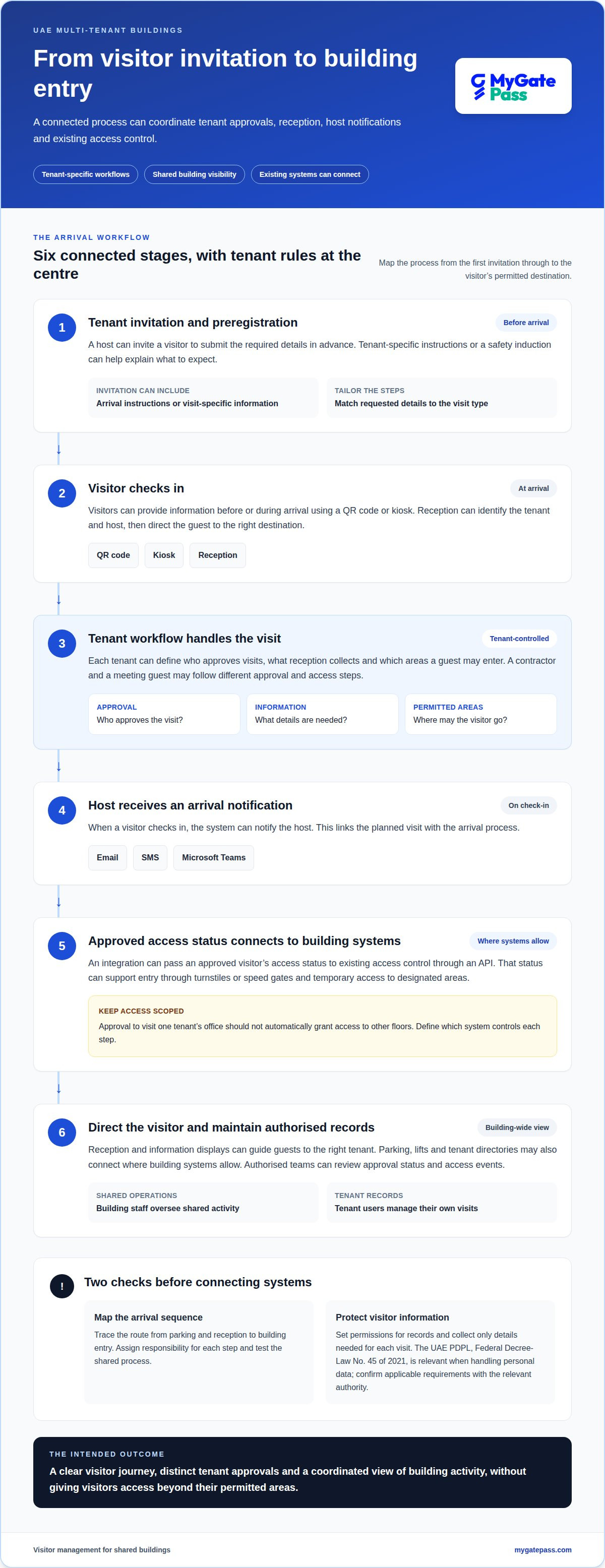
An integration can pass an approved visitor’s access status to existing access control through an API. That status can support entry through turnstiles or speed gates and temporary access to designated areas. For example, approval to visit one tenant’s office should not automatically grant access to other floors.
Map the arrival sequence from parking and reception to building entry. A visitor record can inform parking access, while an information display can direct guests to the correct tenant. Lift access and tenant directories can also connect where the building systems allow. Define which system controls each step.
Tenant-Controlled Access Workflows
Each tenant can set expectations through its own workflow, including who approves visits, what details reception collects and which areas guests may enter. A contractor visiting one office, for example, may need different approval and access from a guest attending a meeting elsewhere.
Role-based access helps keep tenant records separate: building staff can oversee shared operations, while tenant users manage their own visits. A UAE facility can source software from vendors serving the local market; support and integration capabilities differ. Assess how each vendor handles tenant permissions, records and connections to existing systems.
Visitor Registration and Access Logs
There is no single blanket visitor-registration or access-log requirement that can be assumed for every UAE building. Duties may depend on the relevant authority and property requirements. The UAE PDPL, Federal Decree-Law No. 45 of 2021, is relevant when handling personal data, including visitor records; confirm applicable requirements with the relevant authority.
A visitor management system can record approval status and access events, giving authorised teams a history of building entry and exit. Set clear permissions for viewing and managing records, and collect only the details needed for each visit. These steps support confidentiality and a consistent process for reception and security teams.
Why does it matter for multi-tenancy buildings to embrace the visitor management system?
Multi-tenant properties in the UAE can use digital visitor management with a centralised dashboard, tenant-specific workflows and oversight across sites. Implementation involves mapping entrances, assigning tenant roles, configuring registration steps and testing the shared process before rollout.
Centralised Oversight Across Tenants
A centralised view helps facility teams monitor visitor activity across tenants and locations without merging every tenant’s workflow. For example, a property manager can see who is on-site while each tenant handles its own visits. This visibility supports operations during routine activity and helps teams access evacuation lists on mobile devices when needed.
For a multi-site workplace, define which roles can view activity across buildings and which are limited to one tenant. Consistent workflows make oversight easier across facilities, while allowing custom approval steps to reflect tenants’ different visitor requirements.
Shared-Entrance Visitor Registration
A shared entrance can offer one clear registration point for guests visiting different offices or facilities. Reception can identify the tenant and host, direct visitors and keep arrivals consistent. The process is easier for guests to follow, while each tenant retains its own approvals.
During implementation, map each entrance and how visitors reach their destination after registration. A guest attending a meeting, for instance, needs clear directions to the right workplace. For multi-site operations, document the process at each location and align staff responsibilities before extending it across properties.
Visitor Reporting Dashboards
A centralised dashboard can bring visitor activity together for tenant-level and property-level reporting. Facility teams can review occupancy and capacity insights alongside historical entry and exit records. These views help managers understand how shared spaces are used instead of relying on separate local logs.
Visitor-flow reports can inform front-desk staffing and space planning. Managers might compare busy arrival periods across sites, then adjust reception coverage or tenant layouts. Choose reports that answer practical operational questions, with filters that reveal tenant-level patterns without losing the property-wide view.
To plan a shared approach, discuss a centralised visitor workflow for your property’s entrances and tenant needs.
How do visitor preregistration and host notifications work?
Preregistration lets visitors provide required details before arriving at a shared building. Host notifications connect the planned visit with the arrival process.
Visitor Preregistration
A host can send a digital invitation before a meeting, asking visitors to submit required details in advance. The tenant profile can provide arrival instructions or a safety induction suited to the visit. This helps guests understand what to expect before reaching reception.
Visitors can also use a QR code or kiosk to provide information before or during arrival. For example, a contractor can receive instructions for the relevant tenant and location. Tailor the workflow to the visit type so the requested information and steps suit the building’s process.
Automated Host Notifications
When a visitor checks in, the system can notify the host by email, SMS or Microsoft Teams. A clear alert identifies the visitor and visit, helping the host respond without a separate call from reception. Choose the channel that fits the tenant’s existing process.
Tenant profiles can tailor pre-arrival messages and instructions while keeping check-in consistent across the building. For example, one tenant may provide a contractor safety induction, while another sends meeting directions. Useful notifications do more than simply send an automatic alert.
Host Arrival Alerts
An arrival alert should connect check-in to the right host and tenant. The sequence is simple: the visitor checks in, the system records the arrival, and the host receives a notification. Reception can direct the guest while the host prepares to meet them.
For a smooth handover, make the host and visit details clear in each invitation. If a guest checks in at a kiosk, the same process can notify the host. Consistent alerts help hosts respond promptly and make arrivals more predictable across shared spaces.
How does visitor management work in residential and commercial buildings?
In the UAE, visitor management for multi-tenant buildings needs to work for both homes and workplaces. A property may receive employees, residents’ guests, meeting attendees and contractors, each with a different destination and reason for entry.
In a residential community, a guest might visit a resident, use a shared facility or attend an appointment with the management office. Make the destination selection and directions clear. A visitor badge can help staff distinguish a guest from a contractor or business visitor.
For businesses, visitor management for multi-tenant buildings in the UAE can accommodate visits with different requirements. A meeting guest may need directions to an office, while a contractor may need to provide documents before access. Tailored instructions help reception guide visitors without forcing everyone through the same workflow.
Plan how staff will handle exceptions, such as a visitor arriving without an invitation or a host being unavailable. Limit visitor data to details needed for the visit, and make records accessible only to authorised staff. During an emergency, current information about people on-site can help teams account for visitors in shared spaces.
Map visitor movement from the entrance to the destination and back out. Clear directions, suitable check-in steps and a defined checkout process help make arrivals straightforward for residents and businesses alike.
How can MyGatePass support visitor management?
MyGatePass provides software for coordinating visitor and security workflows. Its visitor app, security app and admin dashboard support registration and oversight for building teams.
For a multi-tenant property, these tools can organise visitor operations through a digital process, replacing disconnected manual steps with software-based workflows. MyGatePass focuses on software and does not provide physical guards or manufacture gate hardware.
What should you consider when planning your visitor journey?
Start by defining what a successful arrival should look like at your property. For visitor management for multi-tenant buildings in the UAE, agree who owns each part of the journey, from invitation to departure. A shared standard lets tenants shape their workflows while keeping the building experience coherent.
Then plan how to introduce the process. A focused rollout helps teams understand their roles, gather feedback from reception and tenants, and refine instructions before extending the system across the property. Keep the goal practical: make entry clear for guests and manageable for the people coordinating visits.
When you’re ready to plan a visitor process around your building and tenant needs, discuss your next steps with MyGatePass. A considered start can make the transition easier for everyone who uses the building.
Frequently Asked Questions
Can I have different visitor sign-in processes at each of my locations?
Yes. A multi-location setup can use different sign-in steps at each site while preserving central oversight. For example, a residential entrance may ask guests to identify a resident, while an office site requests the tenant and meeting host. Set a shared baseline for visitor records, then tailor instructions, approval paths and required details to each location’s operational needs.
Can property managers maintain a building-wide visitor blocklist?
A building-wide blocklist is possible only when the visitor system supports it and the property’s access policy allows it. Define who can add or remove an entry, which sites it applies to and how authorised staff handle a potential match. Because blocklist records can involve personal data, limit access and retention to the property’s documented purpose.
Is a cloud-based VMS better than an on-premise system for UAE businesses?
Neither option is automatically better for every UAE business. Cloud systems can suit teams needing central access across locations, while on-premise systems may fit organisations that prefer locally managed infrastructure. Compare connectivity needs, integration with building systems, data governance, security controls and ongoing administration. Choose the model that fits your operating environment and IT policies.
What VMS will let us display NDAs, safety waivers, or induction documents that visitors must sign?
Look for configurable sign-in workflows that present different documents by visitor type or location, including NDAs, safety policies and induction material. For example, a contractor’s invitation could include the relevant safety document before arrival. Check that the process records the required signature or acknowledgement and links completion to the visit, so reception can follow a consistent approval procedure.
What is Smart Building Access in a multi-tenant property?
Smart Building Access describes a connected visitor journey linking digital registration with building entry systems. Depending on the property, this may involve access control, turnstiles, lifts, parking or tenant directories. The aim is to align an approved visit with the right destination and entry process. Integration depends on compatibility with the building’s existing systems.
What features should a UAE multi-tenant visitor management system include?
Prioritise preregistration, clear check-in options, host notifications, tenant-specific workflows and role-based visibility. Useful reporting helps authorised teams review activity by tenant or property. Consider connections to existing access control and support for your building’s document and identity workflows. Arabic and English interfaces can also help serve a varied visitor community across UAE facilities.


